
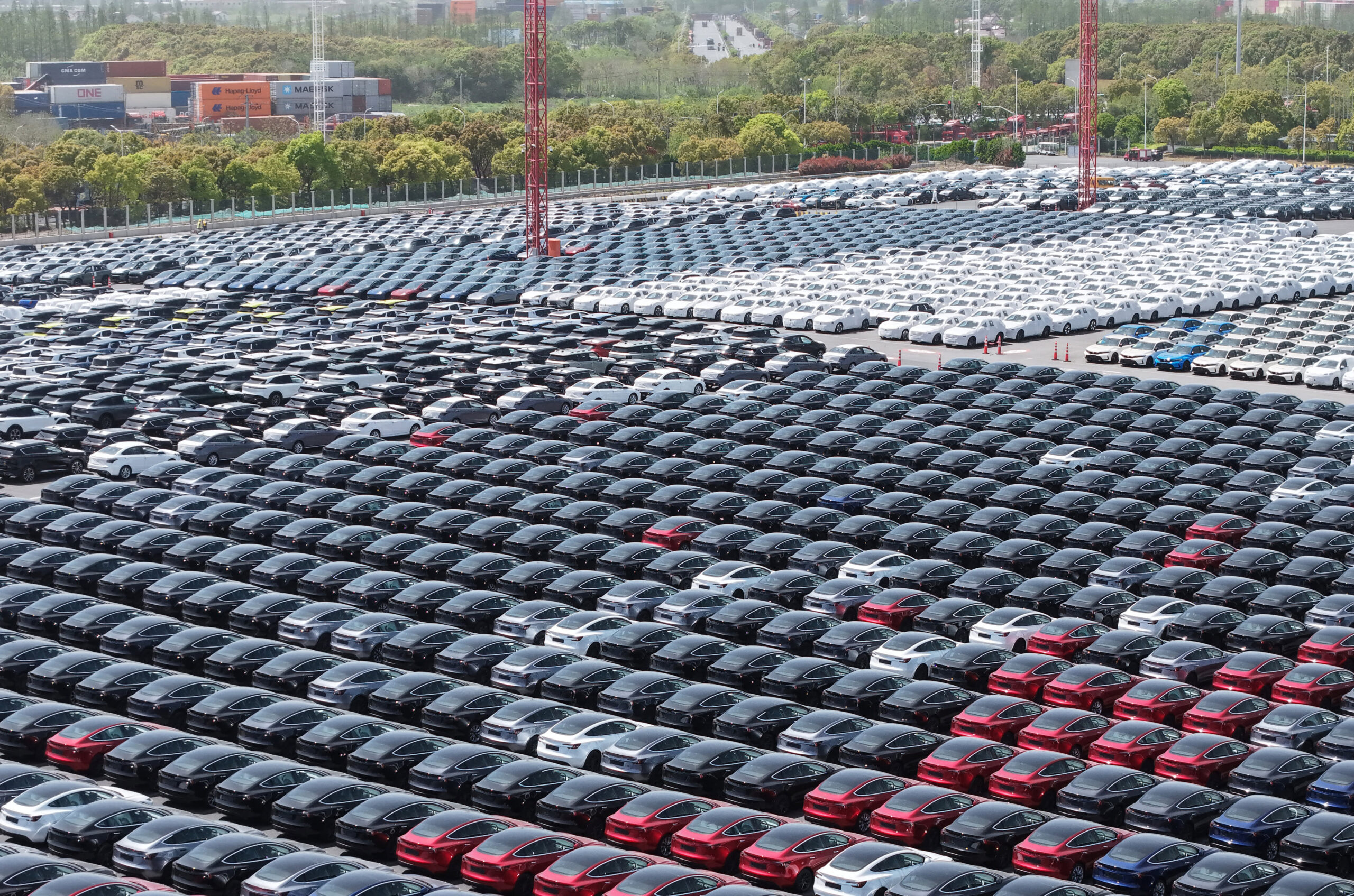

To understand why China is desperate to ship cars overseas, visit a dealership in Beijing.
Autumn has traditionally been the peak time to buy vehicles in the country, but this year many showrooms are empty or shut.
Car salesman Li Ke said that other than the Covid-19 pandemic, the 2026 “golden September and silver October” season, as it’s known, is the slowest he’s seen in his 26 years on the job.
“In past years, customers would come to the showrooms nonstop,” he told CNBC during an interview in his deserted showroom at a complex of dealerships on the outskirts of the Chinese capital. “We would have deals to sign every day. But nowadays we see only two to three deals a week. It’s a dramatic drop.”
Many people in China aren’t buying cars because an unstable job market and a continued slide in property prices have undercut consumer confidence. The government has also scaled back incentives such as cash-for-clunkers subsidies and tax breaks to go electric, car salespeople said.
Passenger car retail sales for 2026 in China totaled 13.33 million units through September, falling 21.7% from a year ago, according to the China Passenger Car Association. For the full year 2026, China’s domestic passenger car retail sales are set to drop 22% to 18.5 million vehicles, the association said — under the level recorded in the first year of the pandemic.
Even electric vehicles, which were once a bright spot, are down. Gasoline car sales have been declining in China because of the country’s transition to electric vehicles, but sales in China of new-energy vehicles — which includes EVs — dropped by 12.8% from January through September, according to the association.
“Customers are watching every penny,” Li said. “When looking at all the new functions on all these new models, they are weighing what is most practical, economic and worth their money over the long term. We don’t see impulse buying. Because of the bad economy, people are taking more time to replace their cars.”
The fierce competition has led to bruising price wars in recent years, a key reason Chinese carmakers have cast their eyes overseas and why Beijing is fearful of partners like the U.S. and Europe putting up coordinated trade barriers against its massive car exports, analysts said.
Industrial profits for the first nine months of the year were up 15.5% from the same period in 2025, but September showed signs of weakness relative to the prior eight months, according to China’s National Bureau of Statistics. For the auto manufacturing industry specifically, profits from January to September shrank by 22.8% compared with last year.
To preserve cash, Li’s dealership moved out of a pricey streetside space to one with less foot traffic but that rents at a fraction of the cost.
With profit margins eroding, Li said he sees little point in offering further discounts. He said the bigger hurdle is the prevailing Chinese consumer attitude toward big-ticket purchases.
“Chinese buyers would rather wait,” he said.
By CNBC