
Three mornings a week around 9:00 a.m., 70-year-old Dao Thi Hoa, a restaurant service worker, stops by a small wooden bread cart situated beside the Ban Co Ward Police headquarters on Nguyen Dinh Chieu Street. Standing before the cabinet, she gently unlatches the wooden door, retrieves two freshly baked Vietnamese baguettes, and closes it shut. One feeds her when hunger strikes during long shifts; the other is wrapped carefully for a coworker working the kitchen line.
Recalling the first time she passed the stall, Mrs. Hoa was intrigued by the solitary cart sitting on the sidewalk. She never knew who provided the bread, nor had she ever crossed paths with them.
“With no keeper in sight, passersby simply open the door, take what they need, and carry on. It is wonderful, yet I never know whom to thank,” she said.
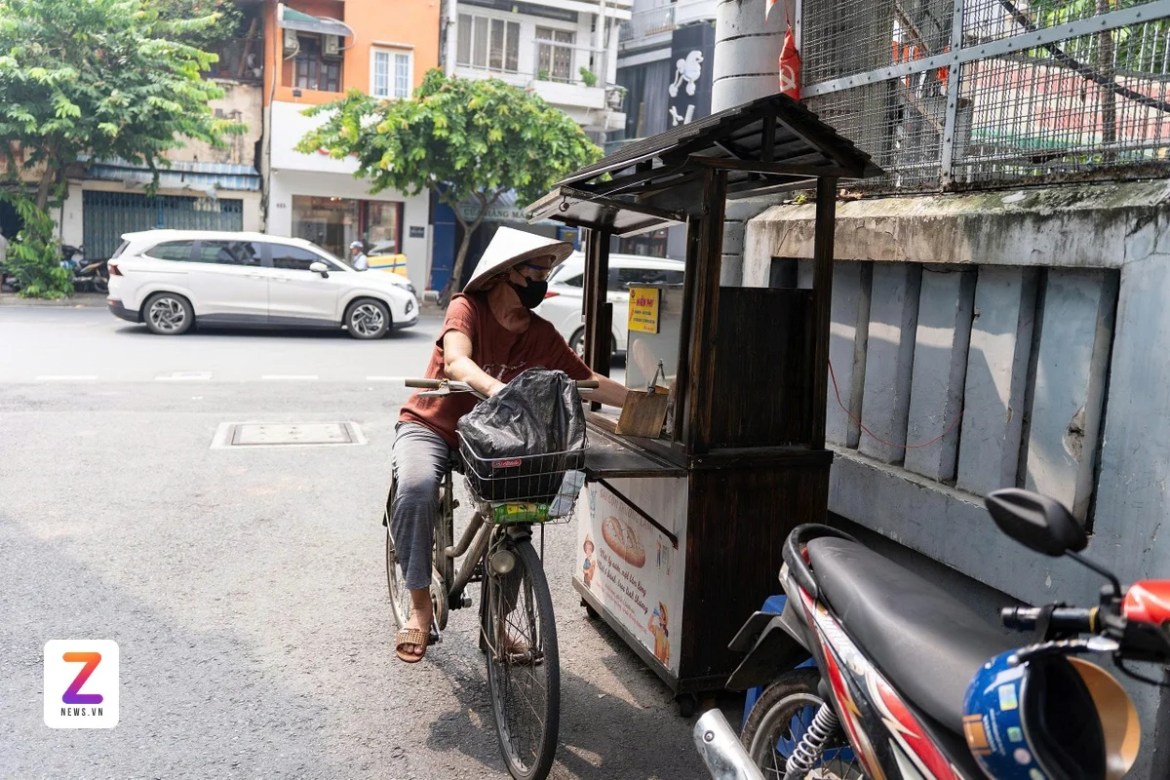
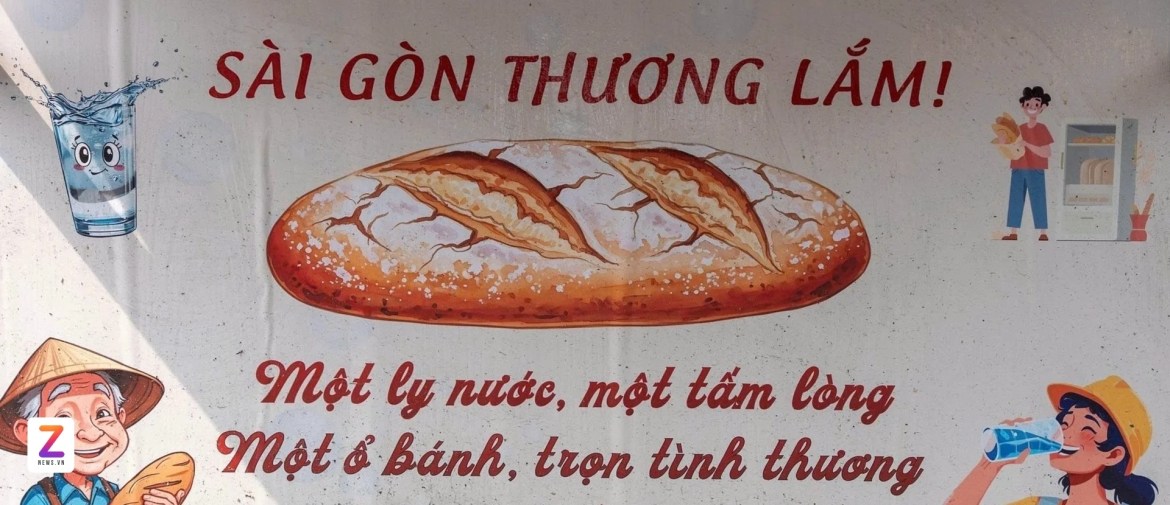
The bread cabinet stands beside the Ban Co Ward Police station.
Over 25 Million VND per Month for Free Bread
Tucked alongside the police precinct, the bread cabinet is easy to spot without resembling a traditional charity handout station.
There are no winding queues, and no one questions anyone’s circumstances or income. Amid the relentless tempo of Ho Chi Minh City from dawn until late at night, a plain loaf of bread answers the urgent call of a quick meal to fuel the next shift.
For over a year, keeping the cart stocked has been a quiet, behind-the-scenes effort. Huynh Trung Phong, who directly manages the site on Nguyen Dinh Chieu Street, explained that this cart is one of three locations his group currently operates across central Ho Chi Minh City.
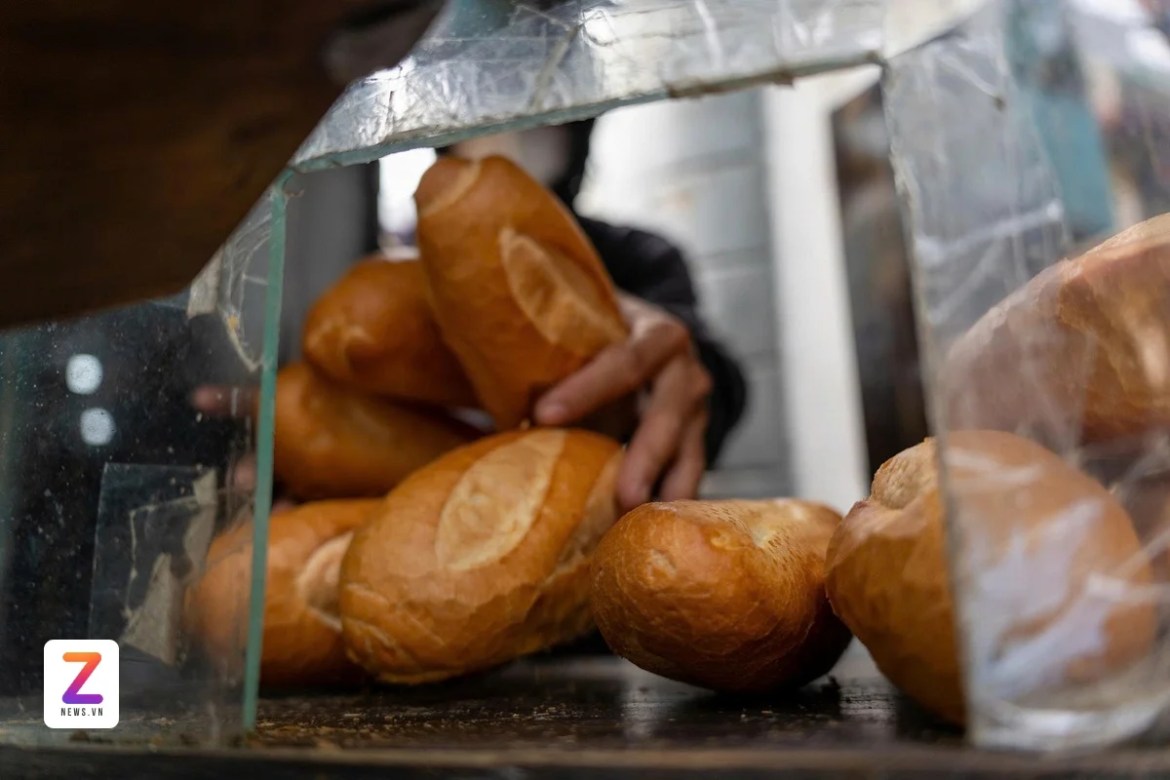
Quan, representing the supplier bakery, restocks the cart at 9:00 a.m. daily.
The initiative originally began with a pilot cart on Nguyen Trai Street. Recognizing that the setup was convenient and provided vulnerable laborers with a filling meal during the day, Phong and his partners expanded to other streets. The Nguyen Dinh Chieu cart has now operated continuously for more than a year.
Maintaining an unmanned food cart, however, has presented unexpected operational hurdles. In the beginning, the system was simpler and less regulated. Fresh loaves were continuously replenished. Beyond plain bread, the cart was stocked with soy sauce, pork floss, Vietnamese pork sausage (chả lụa), and slicing tools so recipients could assemble a proper meal on the spot.
“During peak stretches, consumption surged so high that our bakery expenses escalated to around 25 million VND ($1,000) each month,” Phong noted.
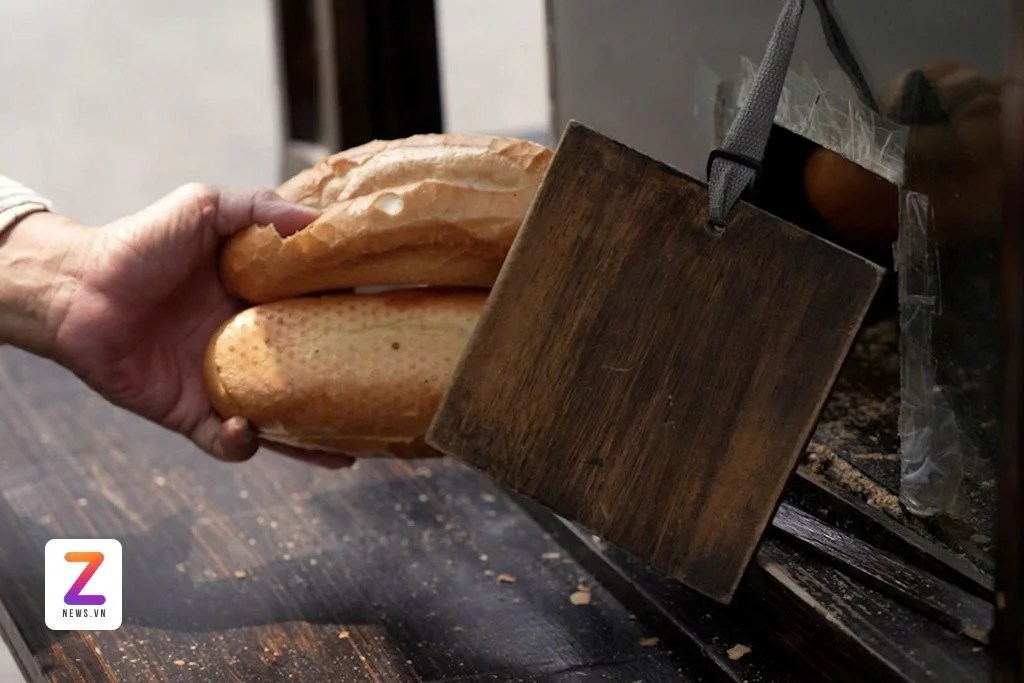
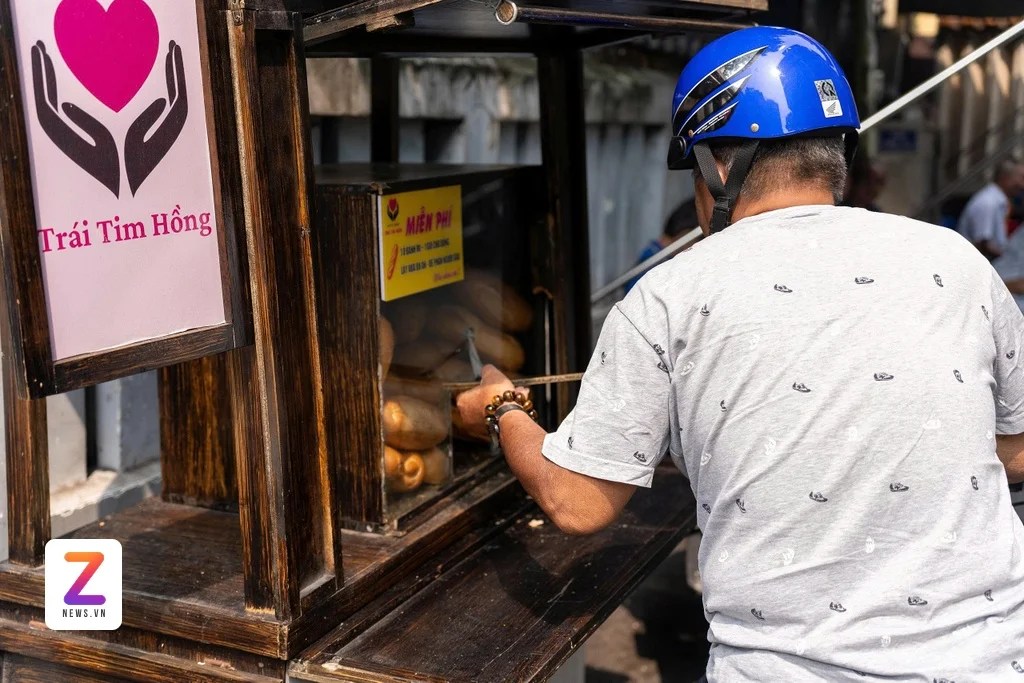
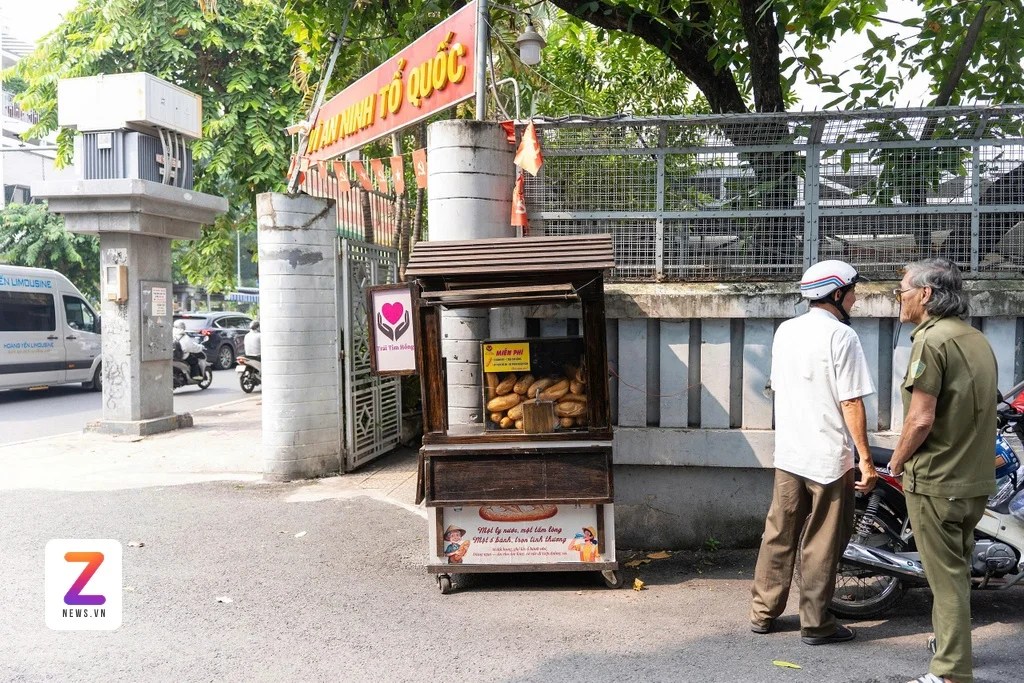
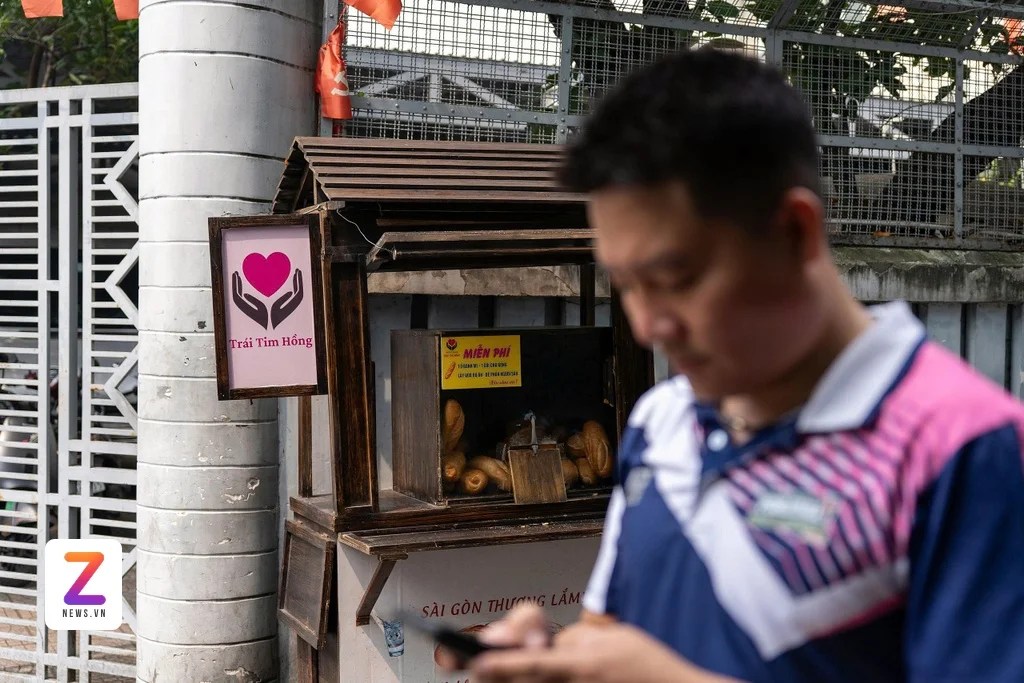
Phong directly oversees the free bread location on Nguyen Dinh Chieu Street.
Over time, the group realized the initial method had become unsustainable. A handful of individuals would take excessive quantities at once, emptying the cabinet before other needy laborers could arrive.
Rather than imposing intrusive monitoring or rigid gatekeeping, Phong’s team decided to cap daily supplies at approximately 100 baguettes, dividing restocks into two fixed slots: morning and afternoon.
“Splitting the supply across two scheduled hours distributes access more evenly throughout the day, preventing total depletion in a single morning rush,” he said.
The team also paused offering side condiments like pork floss and sausage. Streamlining the operation allowed them to channel all resources into securing a reliable daily supply of plain bread without unexpected stock disruptions.
Quan, the bakery representative who delivers the bread, not only drops off batches on schedule but also cleans the station.
On each visit, he checks the remaining stock, sweeps away crumbs from the base, wipes down the corners, and places the fresh batch inside. “Bread offered to others must always rest inside a clean cabinet,” he said.
Solving the Real Estate Dilemma
One of the biggest logistical hurdles for Phong’s group was space. Establishing a permanent charity stall required finding a spot that was accessible to laborers while offering enough room to shelter a food cabinet and ensure long-term stability.
Rather than leasing commercial space, the team streamlined the entire model into a compact bread cabinet. It takes up minimal sidewalk space, fits into an unobtrusive corner, yet remains instantly visible to passersby. This approach avoids turning the assistance into a crowded giveaway event bound to rigid lines.
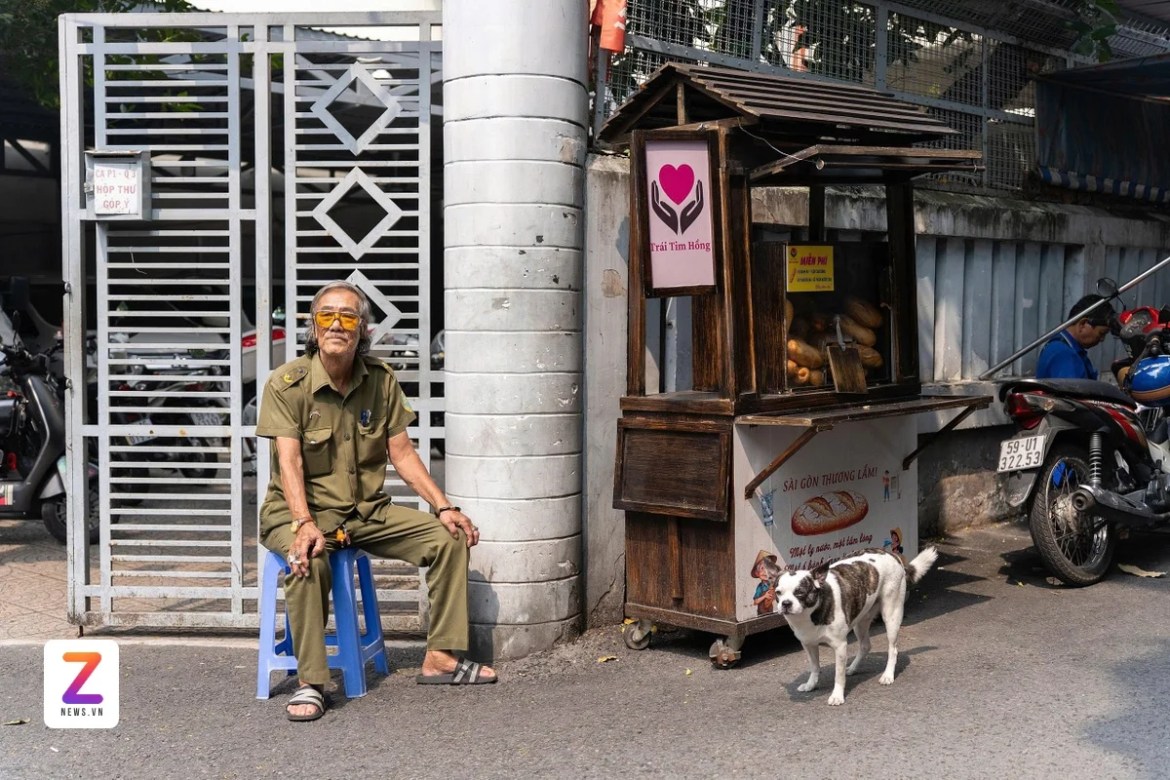
Mr. Nam watches over the cart during his duty shift.
On Nguyen Dinh Chieu Street, the group obtained permission to place the cabinet in an alcove right beside the Ban Co Ward Police headquarters. The location borders a busy thoroughfare while benefiting from the natural oversight of personnel on duty nearby.
Vu Anh Kiet, 36, an officer with the Ban Co Ward public order team, believes this unobtrusive placement gives recipients greater peace of mind. People can simply pull over on their motorbikes or bicycles, open the latch, take what they need, and go, without having to stand before donors or explain their hardship.
“A free loaf of bread may not be a lavish gift, but a discreet handover spares them the indignity often felt when accepting charity,” Kiet observed.
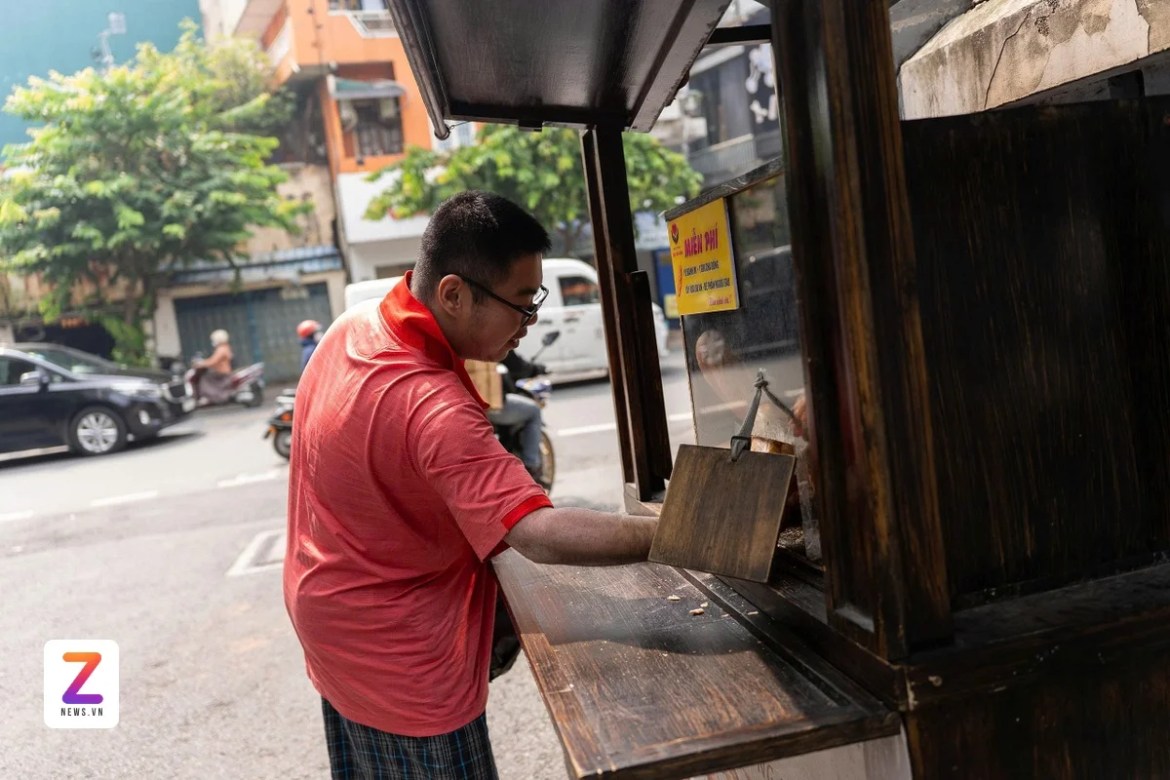
Long drops by to pick up bread on the morning of September 15.
Mr. Phan Chi Nam, a security guard at the precinct, keeps a quiet eye on the cabinet. He avoids hovering over visitors, stepping in only if someone takes an unreasonable quantity to ensure enough remains for others.
“Taking one or two loaves is completely normal. If someone takes an entire armful, I gently remind them to leave portions for the next person,” he said.
The unmanned setup also preserves personal dignity and agency. Long, a nearby resident with a leg disability that keeps him from working, noted that the free bread provides relief during lean stretches. He often feels self-conscious accepting face-to-face handouts.
“Here, I feel much more comfortable because I don’t have to look a benefactor in the eye or explain my personal struggles,” he said.
(Source: Znews.vn)
Related
Discover more from Vietnam Insider
Subscribe to get the latest posts sent to your email.
Source: Vietnam Insider