
During three consecutive summers from 1991 to 1993, German photographer Hans-Peter Grumpe spent 83 days exploring Vietnam. He first arrived in Ho Chi Minh City in 1991, assembling an extensive visual archive of iconic southern landmarks. For example, his early frames showcase the City People’s Committee headquarters, which French architects originally designed around a traditional northern French bell-tower motif.
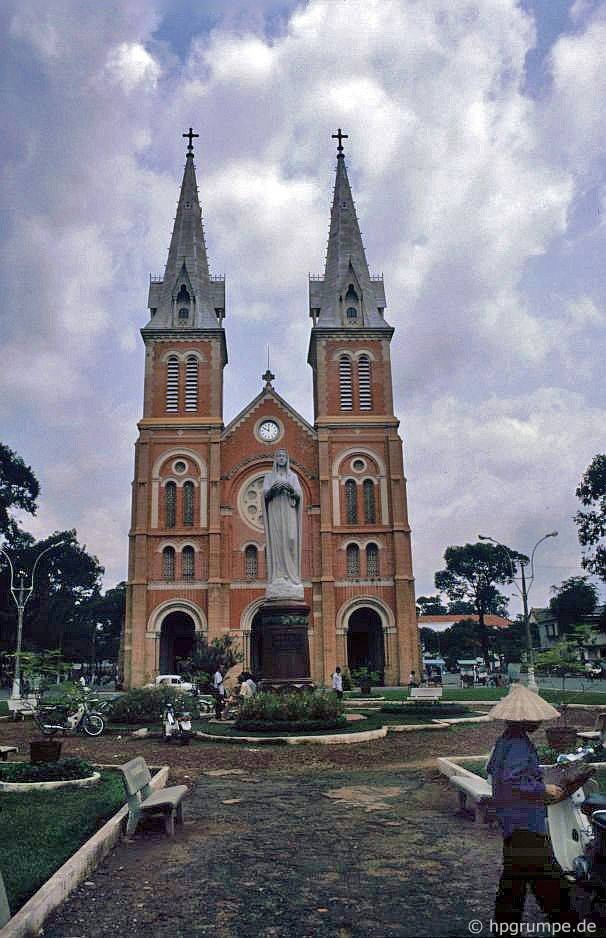
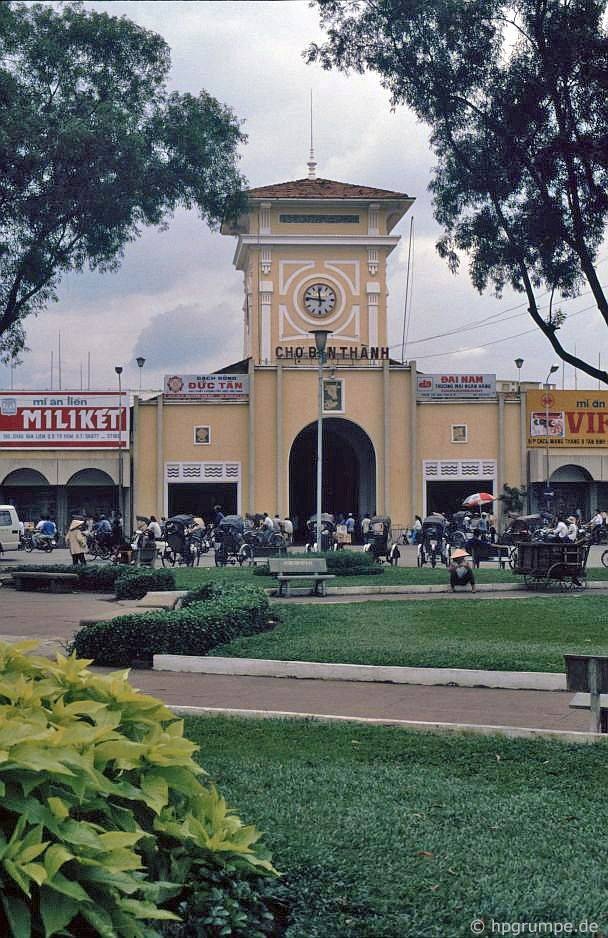
Workers erected the Saigon Notre-Dame Basilica in 1880, mirroring Notre-Dame Cathedral in Paris. During construction, builders shipped every single material directly from France across the seas. Over more than a century, the cathedral has preserved its defining architectural lines. Meanwhile, Ben Thanh Market retained its undulating roofline, four-faced clock tower, and pointed eaves. Beyond meeting the shopping needs of local residents, the market now welcomes millions of international visitors every year.
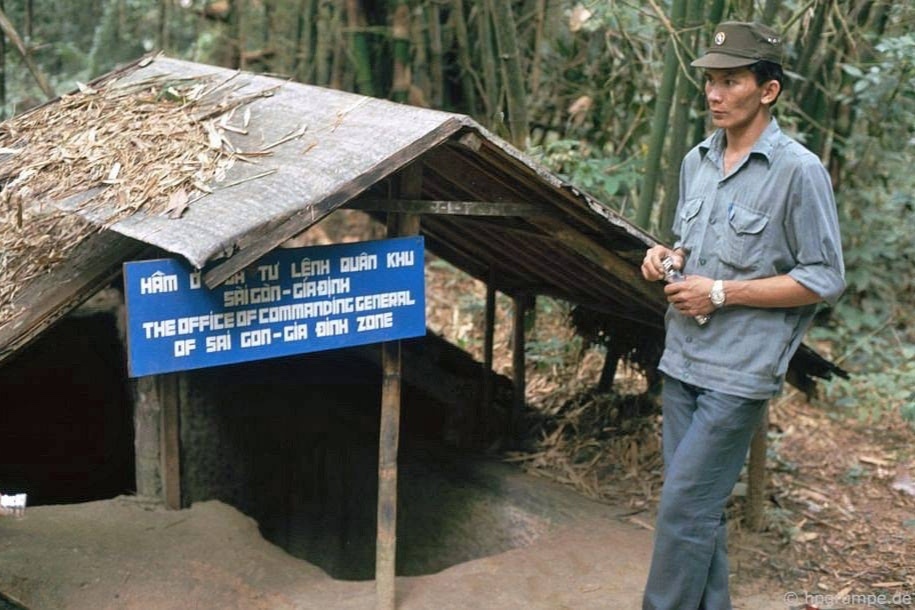
Roughly 70 kilometers northwest of downtown Ho Chi Minh City, the Cu Chi Tunnels extend nearly 250 kilometers. In fact, this complex served as a vital base for the Saigon-Gia Dinh Party Committee and Regional Military Command. These underground passages interlace like a massive subterranean spiderweb. Many narrow sections forced fighters to crawl on their bellies, creating an intricate underground labyrinth. Furthermore, hidden hatches concealed the underground quarters on the surface, offering safe spaces for sheltering troops, conducting secret meetings, and caching weapons.
Quiet Highlands and Coastal Havens of 1992
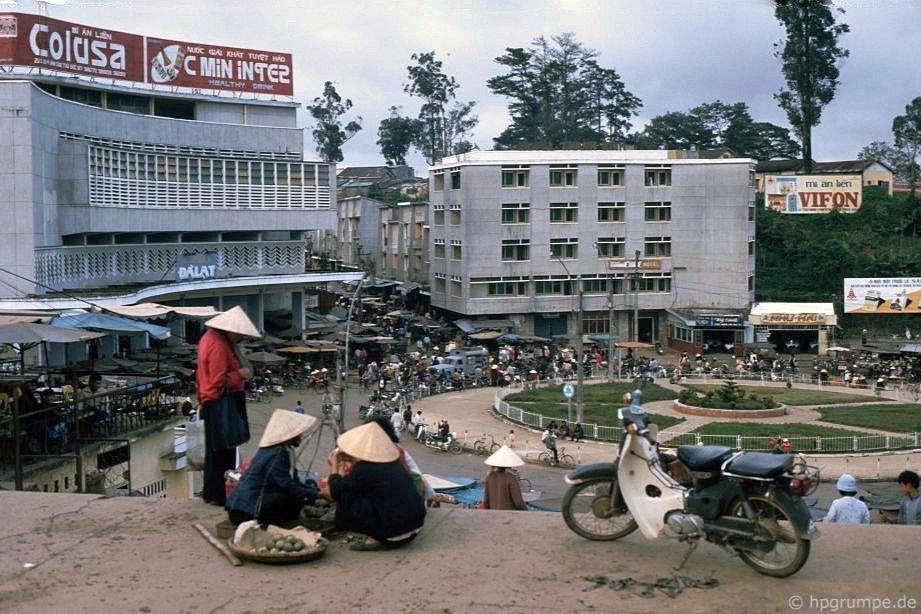
In a series of rare frames shot in 1992, Da Lat appears remarkably peaceful and untouched. Nestled between modern buildings and red-tiled French colonial villas, tall pine groves rose gracefully into the highland mist. Local builders opened the central Da Lat Market in 1929. Consequently, it served as both a bustling trade venue and an essential historical landmark of the mountain town.
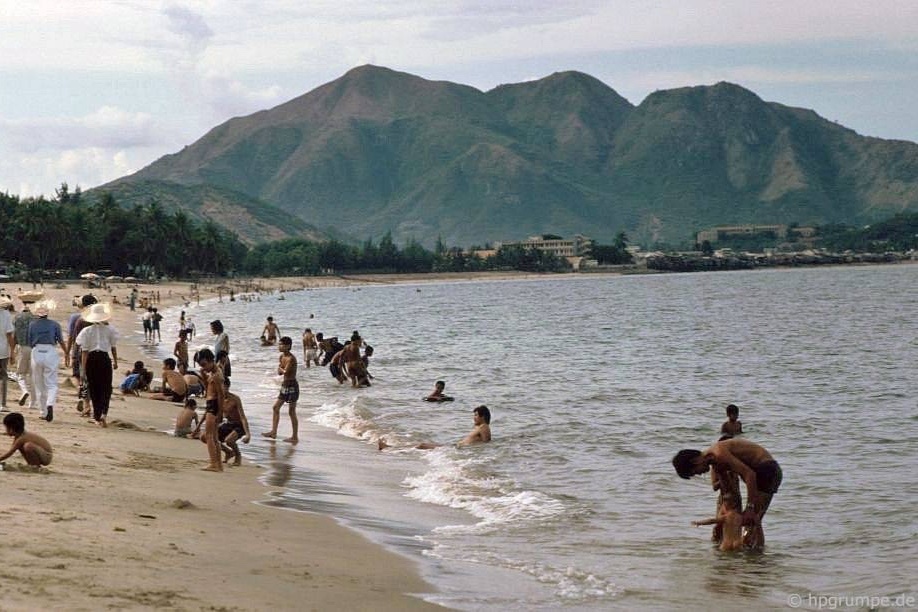
When Hans-Peter Grumpe arrived in Nha Trang in 1992, the coastal town hosted virtually no foreign tourists or modern hotels. Golden beaches lay completely empty of vacationers, attracting almost exclusively local residents. Therefore, Grumpe fondly recalled Nha Trang back then as an exceptionally gentle, peaceful seaside enclave.
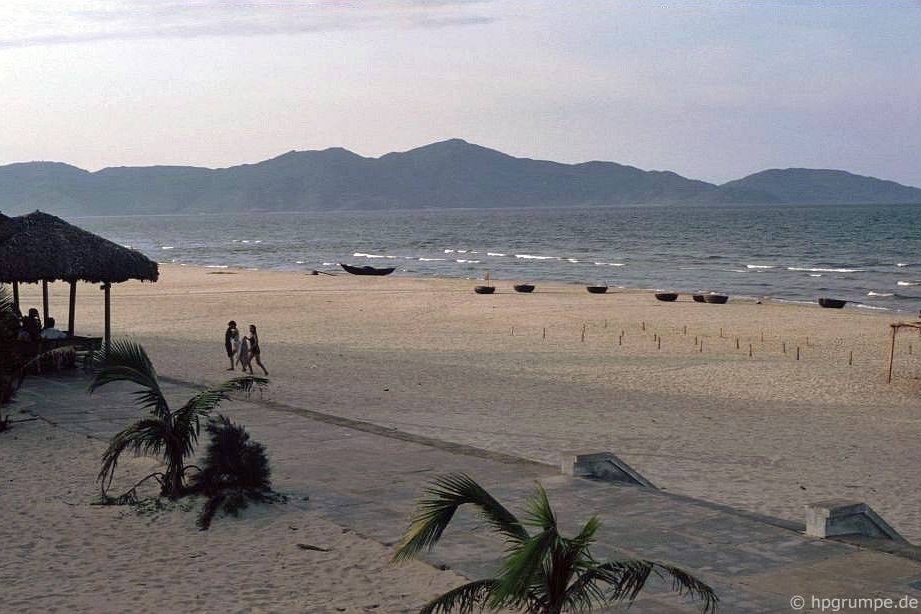
Similarly, My Khe Beach in Da Nang throughout 1991 and 1992 remained completely free of commercial tourism. It maintained an untamed shoreline where only local children from neighboring fishing villages played in the surf. At daybreak, fishermen bustled across the sands, mending nets and sorting coastal catches. Beachgoers found no sun umbrellas or loungers along the shore, seeing only modest stalls that poured hot green tea. Decades later, however, My Khe earned regular spots on international travel rankings. Most notably, Tripadvisor ranked My Khe sixth among Asia’s top ten beaches in a 2024 global survey.
Untouched Heritage Along the Central Coast
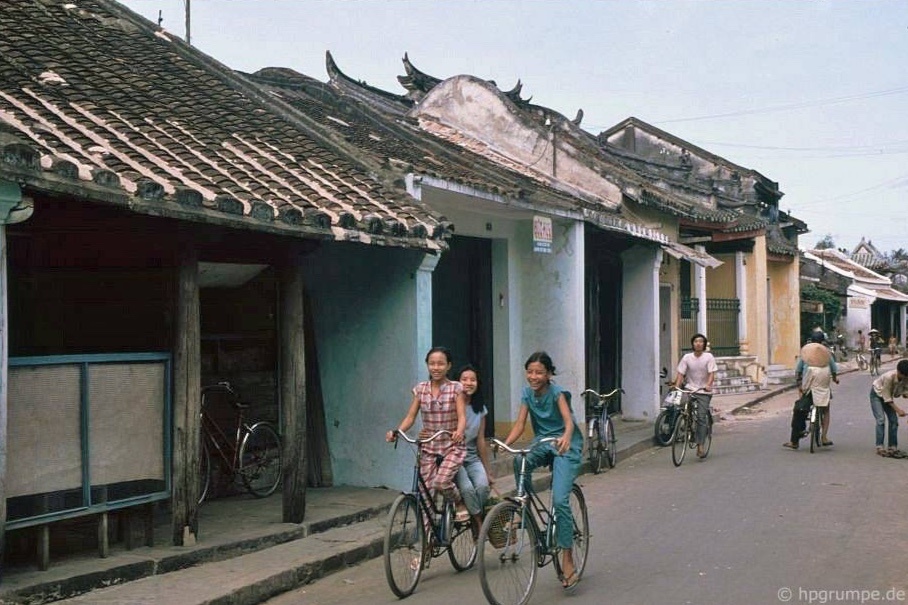
Three decades ago, Hoi An saw almost no tourists, even though official tourism maps first recognized the town in 1985. The ancient quarters held no boutique hotels, fine-dining restaurants, cocktail bars, or souvenir stalls. Instead, rows of timber shophouses kept their original weathered structures, showing no signs of mass restoration or the uniform yellow paint that visitors see today. Furthermore, residents moved along the quiet lanes entirely on bicycles and pedicabs.
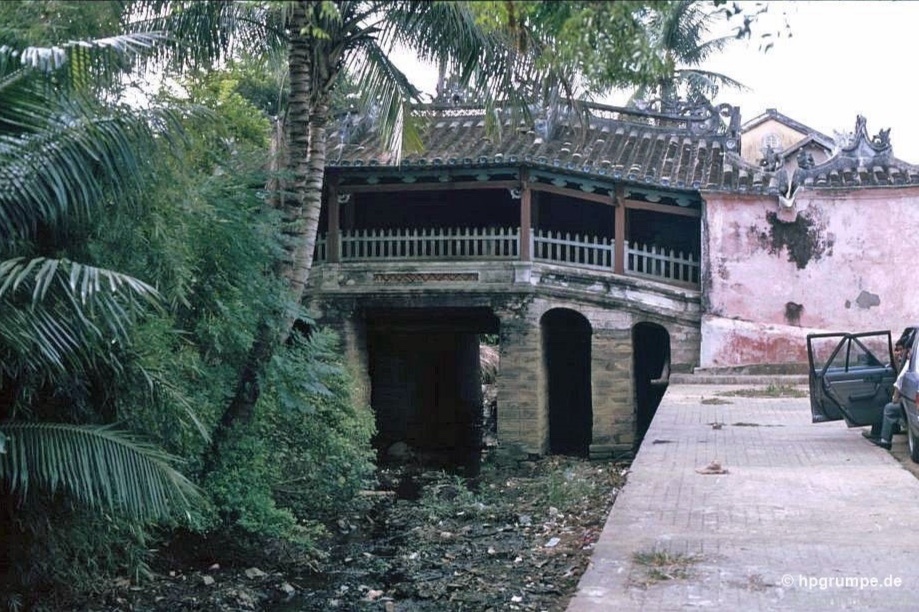
In 1991, the Japanese Covered Bridge (Chùa Cầu) had not yet undergone large-scale public renovations, concrete embankments, or modern city planning. Green moss carpeted the historic wooden span, while decades of monsoon rains darkened its overlapping yin-yang roof tiles. Back then, locals simply sat before the bridge to rest and chat during warm afternoons. At night, the bridge slipped into deep silence beneath dim yellow streetlamps.
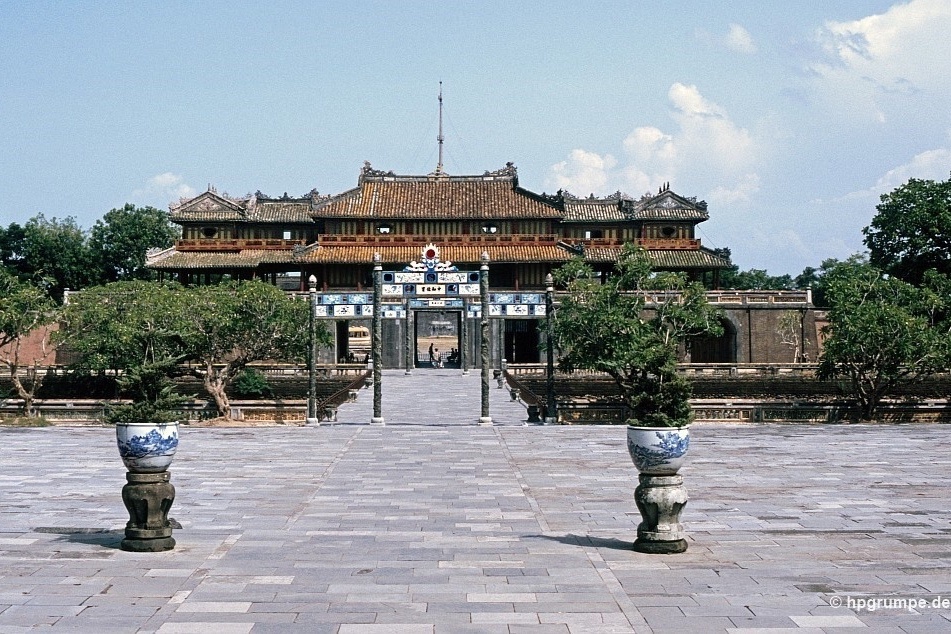
During his travels, Hans-Peter Grumpe took nearly 100 photographs in Hue, devoting dozens of frames to the Hue Imperial Citadel. Emperor Gia Long broke ground on the citadel in 1804 after selecting Hue as the imperial capital of the Nguyen Dynasty. In 1991, the compound showed visible scars from decades of wartime destruction and harsh weather. Heavy humidity weathered large sections of the masonry, while thick moss clung to the boundary walls. Today, the complex forms the crown jewel of the Complex of Hue Monuments, which UNESCO honors as a World Cultural Heritage site.
Northern Landmarks on the Cusp of Transition
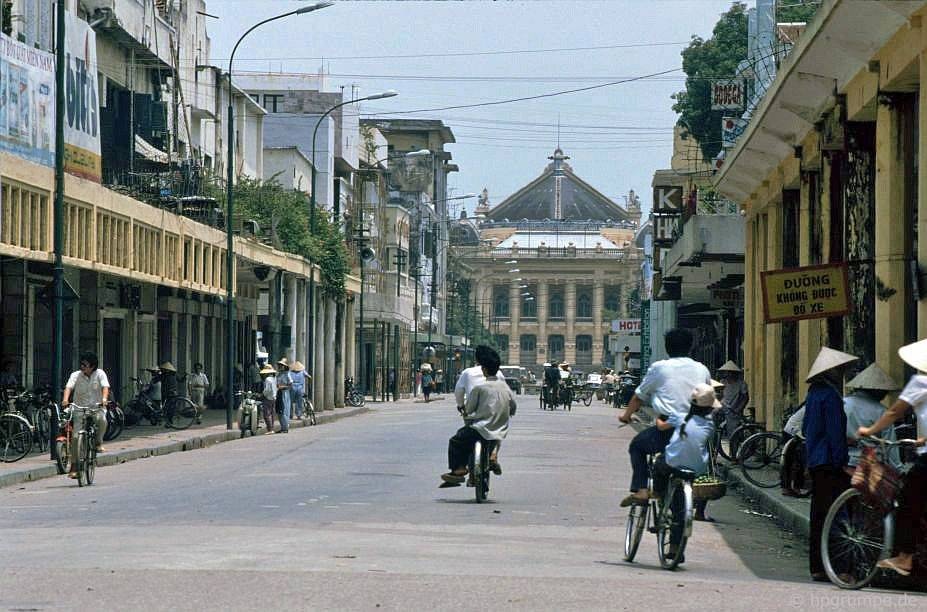
In Grumpe’s memory, Hanoi possessed a distinct character, moving at a slower, quieter pace than Ho Chi Minh City. French colonial buildings lined the city avenues, so every evening stroll became an unforgettable journey into the past. In particular, Trang Tiến Street led straight toward the neoclassical pediments of the iconic Hanoi Opera House.
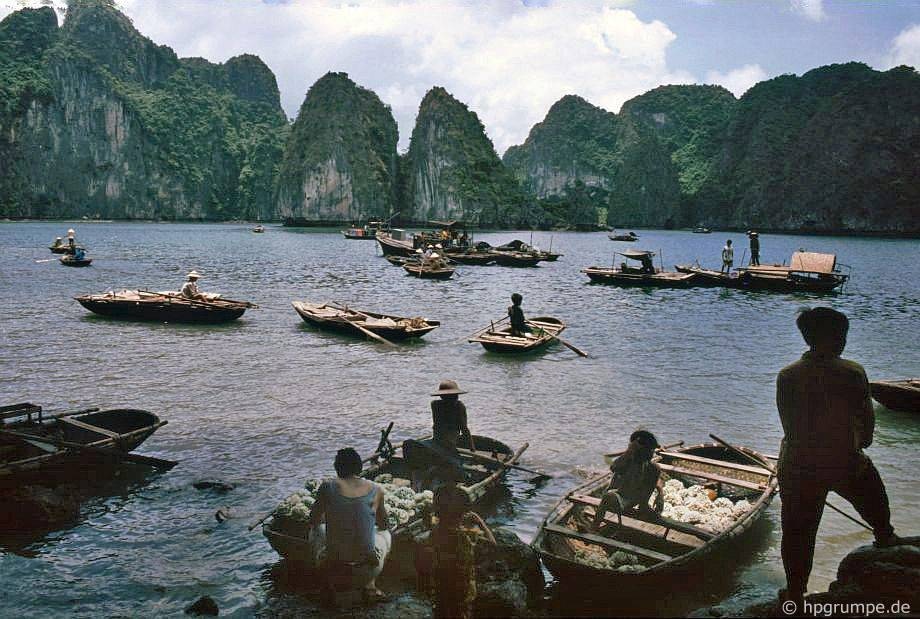
The German photographer visited Ha Long Bay in 1991 and returned again in 1993. Over those two short years, the coastal landscape changed visibly. In 1991, the bay featured only a single state-run hotel and a handful of government dining rooms. Soon after, private enterprise gained ground, which quickly sparked the rise of private hotels and family-run restaurants. As a result, domestic tourism began its rapid growth across the bay.
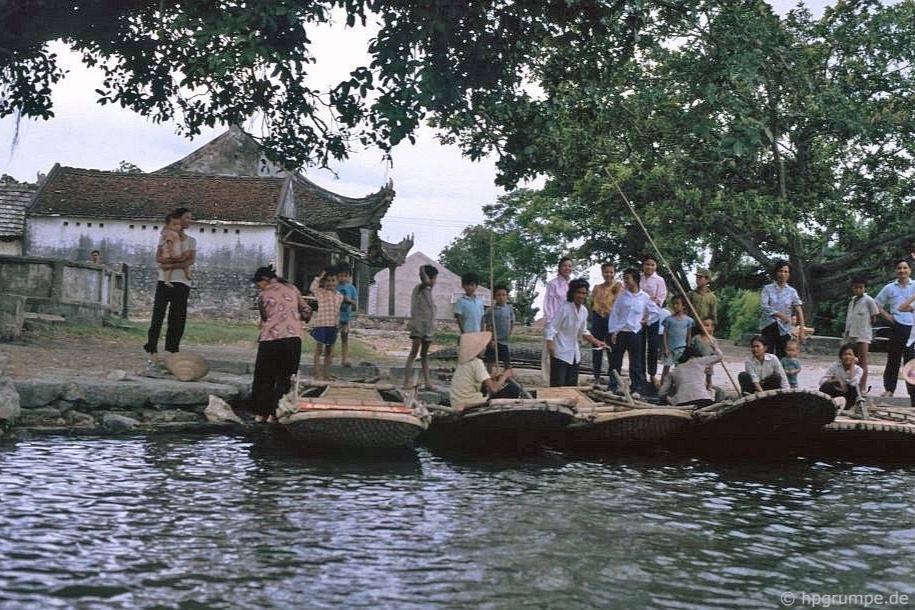
In Ninh Binh, Grumpe hired a traditional wooden sampan to explore Tam Coc. While drifting through scenic limestone waterways, he documented dramatic karst towers alongside local farmers tending low-lying paddy fields.
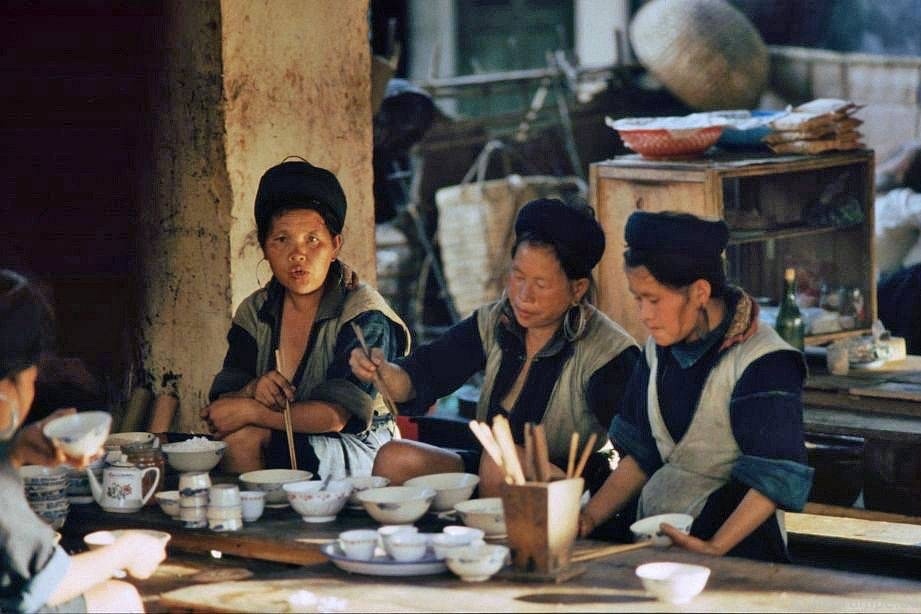
According to his travel journals, Sa Pa three decades ago bore little resemblance to today’s bustling resort hub. When he arrived in 1992, international guidebooks had barely mentioned the remote mountain outpost. Yet within a single year, changes accelerated dramatically. Starting in 1993, authorities allowed independent travelers to visit without special security permits. Consequently, the earliest tour groups arrived, setting off a swift economic transformation across the misty mountain valley.
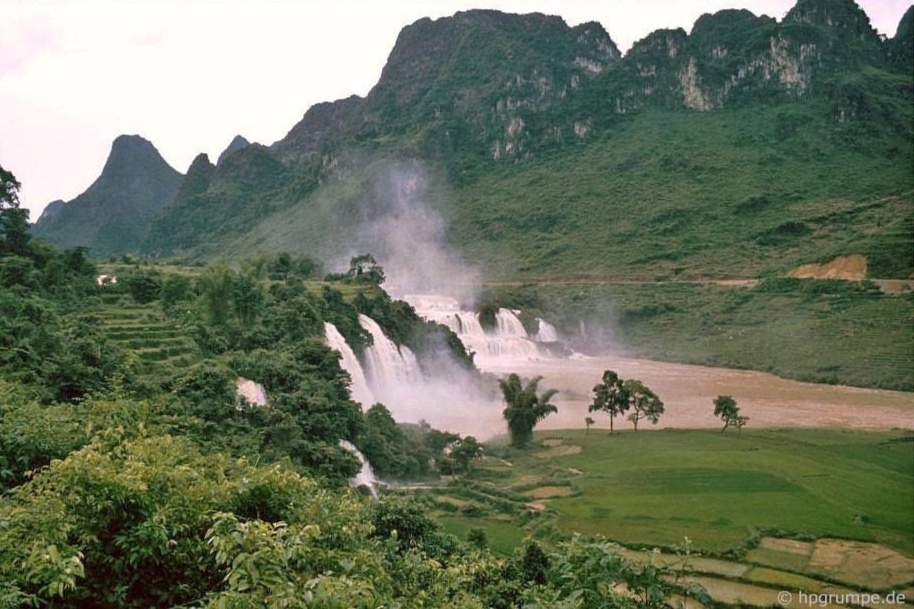
In July 1993, Grumpe undertook an overland journey from Hanoi to Cao Bang aboard a rugged Soviet UAZ jeep. At the time, Ban Gioc Waterfall had not yet appeared on commercial tourist routes. Therefore, the site featured no ticket booths, guesthouses, or food stalls. Pristine primary forests framed the roaring cascades, dotted with sparse ethnic minority settlements. Because he visited during the peak July monsoon, the torrential river ran heavy with red silt, creating a thunderous rush of water that he described as breathtakingly grand. Today, Ban Gioc Waterfall in Dam Thuy Commune, Cao Bang Province, stands proudly as the largest natural waterfall in Southeast Asia and the fourth-largest border waterfall on Earth.
(Source: zingnews.vn)
Related
Discover more from Vietnam Insider
Subscribe to get the latest posts sent to your email.
Source: Vietnam Insider