
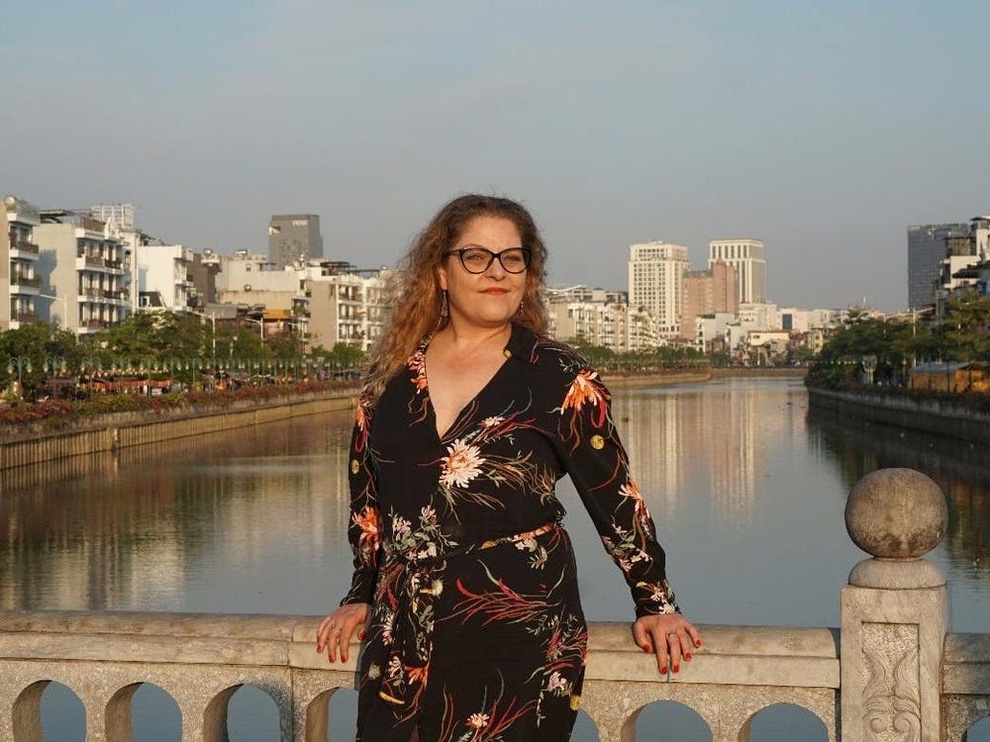
One one-way ticket to Southeast Asia turned loneliness into freedom, and a temporary move into a lasting home.
At a time when many people in their late 30s feel pressured to “have it all,” one woman’s decision to leave everything behind for Vietnam is resonating far beyond Southeast Asia. Deidre Donnelly, a freelance writer from Cape Town, arrived in Vietnam on a one-way ticket nearly seven years ago. She planned to stay for a year. She never left.
Approaching 40 without a husband or children, Donnelly felt increasingly isolated in South Africa. Her family lived elsewhere, her career had stalled creatively, and the future felt narrowly defined by what she hadn’t achieved. Rather than waiting for life to change, she made a private pact with herself: if marriage hadn’t happened by 40, she would start over somewhere entirely new.
Vietnam offered that reset. Taking a one-year teaching contract in the port city of Hai Phong, Donnelly arrived with no local connections and few expectations. The reality was jarring. The heat, traffic, density, and language barriers were overwhelming, and as a foreigner outside the expat-heavy hubs of Hanoi or Ho Chi Minh City, she often felt conspicuously out of place.
But three months in, something shifted. Her days filled with shared housing, new friendships, language learning, and teaching children and teenagers. Life became communal again, resembling the social intensity of college rather than the isolation she had felt back home. When COVID-19 disrupted Vietnam mid-contract, many younger teachers left. Donnelly stayed.
That decision deepened her connection to the country. As Vietnam reopened, she traveled widely, built long-term friendships, taught hundreds of students, and embedded herself in daily life. Loneliness, once a defining feature of her life, largely disappeared. She started book clubs and food groups, formed bonds across age and culture, and became known locally as “Teacher Dee.”
Living in Vietnam also reframed her identity. In a society where being unmarried and childless in middle age is still considered unconventional, teaching gave her purpose, structure, and belonging. Financially, her situation stabilized. Emotionally, she found safety, autonomy, and momentum — three things she says she struggled to maintain in Cape Town.
Today, nearly seven years later, Donnelly describes herself as having two homelands. She misses South Africa’s nature and familiarity, but knows she would grieve Vietnam’s freedom, security, and sense of possibility. Friends and family often ask when she’s coming home — a question that grows heavier as she nears 50. For now, she has no answer.
Vietnam, she says, is a place of constant motion: open doors, narrow alleys, crowded markets, and a quiet optimism that fuels reinvention. Leaving it one day feels inevitable — but not yet.
For a growing number of Western professionals, digital workers, and educators, Donnelly’s story reflects a broader shift. Vietnam is no longer just a travel destination or short-term posting. For many, it has become a place where alternative lives — freer, less scripted, and deeply connected — are not only possible, but sustainable.
Related
Discover more from Vietnam Insider
Subscribe to get the latest posts sent to your email.
Source: Vietnam Insider