
A Famous Hanoi Specialty with Coastal Roots
When people think of Hanoi’s summer offerings, “red jellyfish” is one of the first delicacies that comes to mind. It is a dish served cold, requiring almost no heat-based cooking, and is traditionally accompanied by a pungent fermented shrimp paste and a variety of fresh herbs. Despite being synonymous with Hanoi’s street food scene, this jellyfish is neither caught nor processed in the capital. Its origins actually lie in the coastal provinces of Hai Phong and Nam Dinh.
The Secret Behind the “Ruby” Color
After being harvested, the jellyfish undergo a traditional soaking process using water infused with the bark of su and vet (mangrove) trees. The tannins from the bark gradually penetrate the jellyfish flesh, serving as a natural preservative while creating a characteristic crunch and staining the meat a vibrant, ruby-red color. This distinguishes Northern red jellyfish from the common white varieties found in Central Vietnam, which are usually prepared and eaten immediately without the coloring process. Many people mistakenly believe the red color is natural, when it is, in fact, the result of this careful artisanal preparation. Notably, this dish is strictly seasonal, appearing only during the summer months before disappearing until the following year.
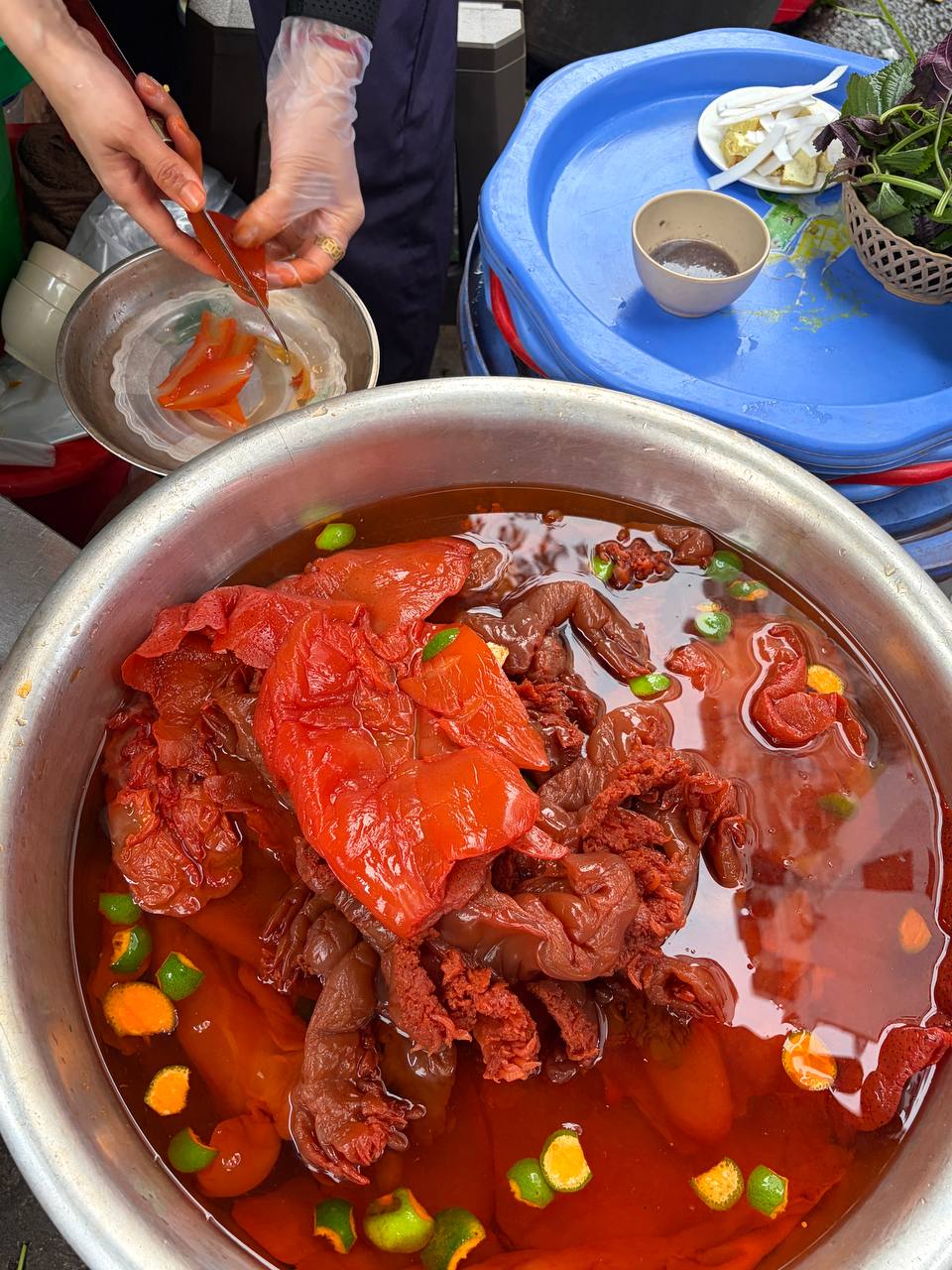
The jellyfish turns red from being soaked in water steeped with su and mangrove tree bark.
The Essential Hanoi-Style Platter
A proper plate of red jellyfish is not just about the star ingredient; the accompanying components are vital to the flavor profile. The platter features mature coconut, which, unlike young coconut that is soft and watery, is crunchy and nutty, providing a delightful contrast to the chilled, jelly-like texture of the seafood. It is served alongside turmeric-grilled tofu, which is brushed with turmeric for a golden hue and fragrant aroma, then grilled over charcoal until the exterior is crisp while the inside remains firm. Completing the experience is a vibrant mix of perilla and marjoram leaves paired with a dip of fermented shrimp paste, whipped to perfection with lime juice, sugar, and chili.
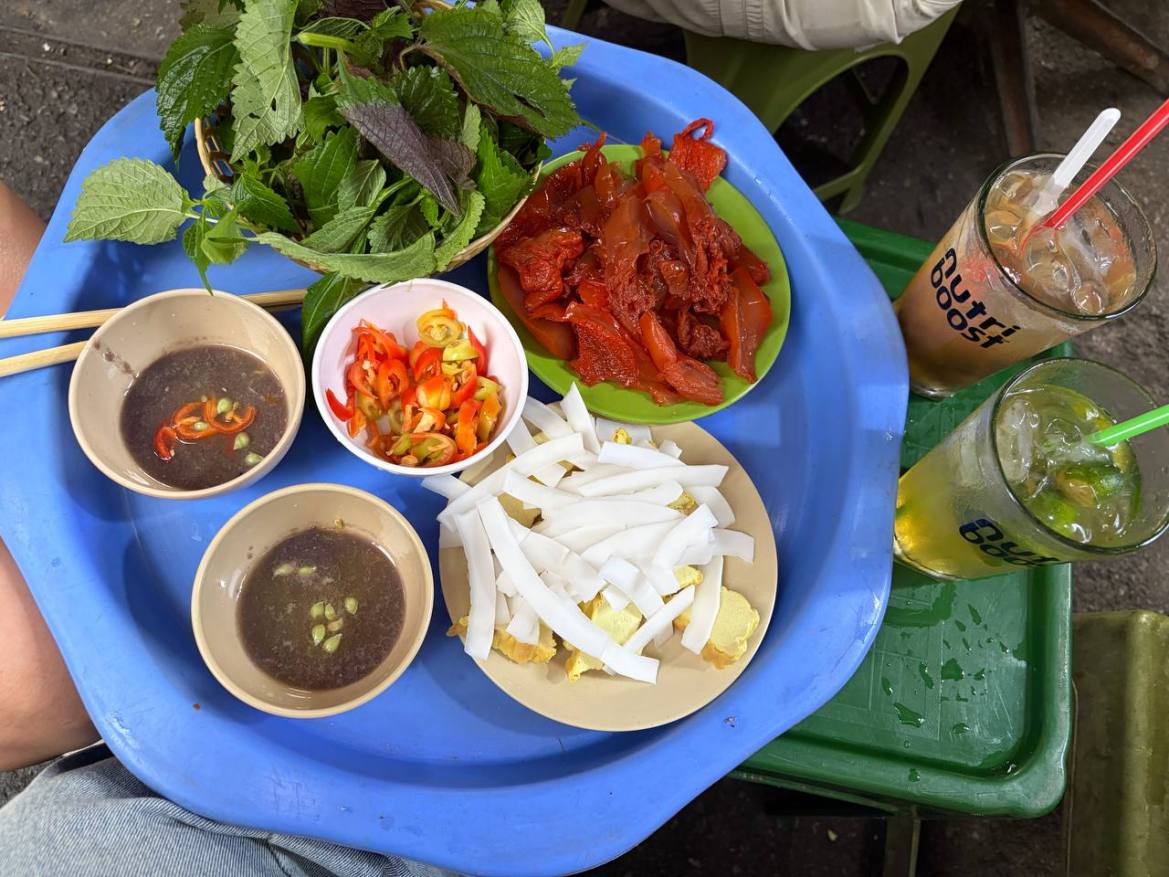
A proper serving of red jellyfish is paired with crunchy mature coconut, smoky grilled tofu, fresh perilla and marjoram, and a bold fermented shrimp paste.
A Sophisticated Culinary Experience
Preparing the dish is deceptively simple but requires precision. Before serving, the jellyfish is rinsed and soaked in lime juice for 15 minutes to ensure cleanliness and enhance its vibrant color. The coconut and tofu are sliced into strips to match the size of the jellyfish, making them easy to wrap with the aromatic herbs. To enjoy it properly, one must place a perilla and marjoram leaf at the base, stack a piece of red jellyfish, turmeric tofu, and a slice of coconut on top, roll it up, and dip it generously into the whipped shrimp paste.
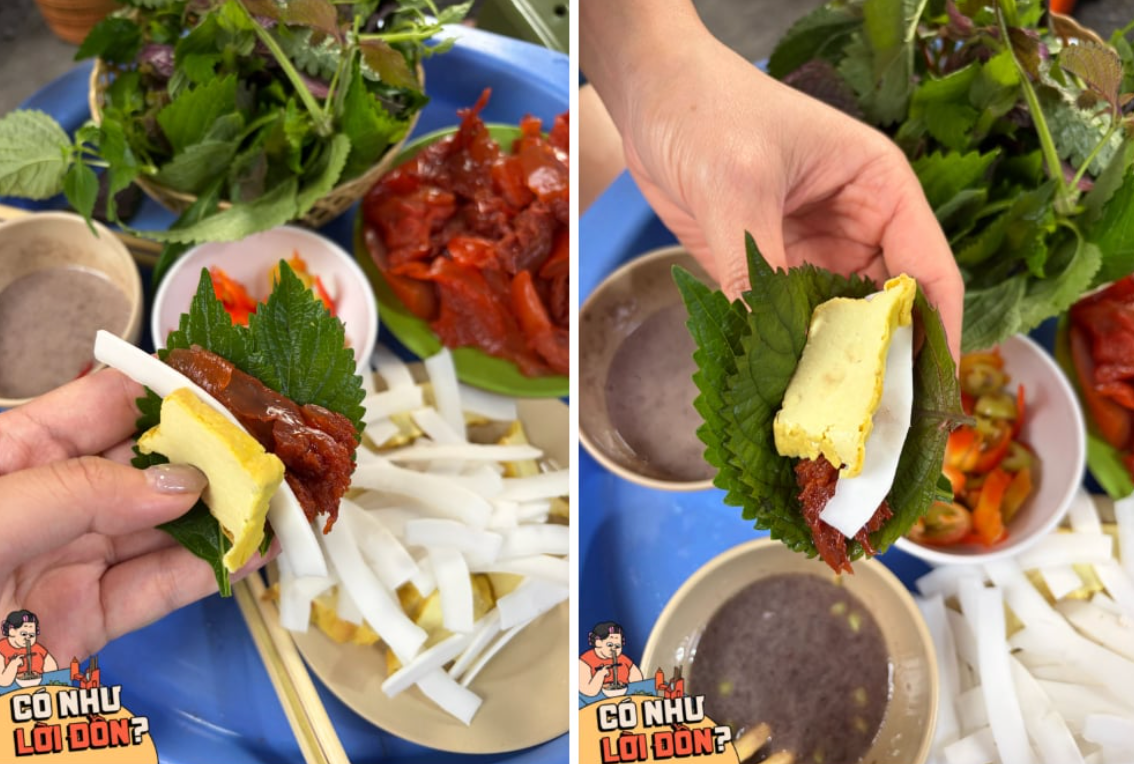
The allure of the dish lies in its complex, layered textures: the cool, crisp, slightly chewy jellyfish; the nutty crunch of the coconut; and the earthy aroma of the grilled tofu, all unified by the bold, savory punch of the shrimp paste. Red jellyfish is not intended to be a heavy meal; rather, it is a quintessential summer treat. Its refreshing nature and unique flavor profile make it a beloved choice for Hanoians looking to beat the heat on the year’s hottest days.
Photo: Kenh 14
Source: Vietnam Insider